
[360 KB PDF*, 3 pages]
Toluene Safety in the Workplace
Toluene, also known as "methylbenzene", "phenylmethane" or "toluol" is a clear, colorless liquid with a sweet smell. It dissolves other substances easily and evaporates quickly into the air. Toluene is also highly flammable and may catch on fire if exposed to heat or flames.
How Do You Know if You Are Working with Toluene?
Toluene is used in many products and workplaces, from printing operations, manufacturing facilities and construction sites to nail salons. Workers should read product information on the packaging or in printed materials delivered with the product such as material safety data sheets (MSDSs)* or safety data sheets (SDSs). Employers must make MSDSs or SDSs readily available so workers can get information about the products they are using. Employers must also provide workers with training and information about the hazards of the products used and how to work with them safely.
How Can Toluene Affect You?
You can be affected by toluene in the workplace if you:
- Breathe it in (inhalation);
- Get it on your skin (skin contact);
- Get it splashed into your eyes (eye contact); or
- Swallow it after it gets onto your hands and is transferred to food (ingestion).
These types of "exposures" may make workers sick immediately or cause health effects over time.
Without taking proper safety precautions, toluene can cause:
- Headaches and dizziness
- Dry or cracked skin
- Irritated eyes, nose and throat
Exposure can also affect color vision and hearing. Symptoms may get worse as toluene levels in the air or skin contact increases. Over time, exposure to high concentrations, day after day, may lead to tiredness and slow reaction, difficulty sleeping, numbness in the hands or feet, or female reproductive system damage and pregnancy loss. If swallowed, toluene can cause liver and kidney damage.
How Much is Too Much?
Many people can smell toluene at levels below established limits. But, if you can smell it, then it is getting into the air. Do not count on odor as your warning. You may "get used to the smell (olfactory fatigue)" and no longer be able to smell the toluene. Your employer should collect air samples to determine if you are being exposed to toluene above the Federal OSHA permissible exposure limits (PEL). Employers are required to keep worker exposures at or below the PEL. For toluene, this means keeping worker exposure at or below the PEL of 200 parts per million (ppm) of toluene for an 8-hour work shift (29 CFR 1910.1000 Table Z-2). However, OSHA recommends that employers use exposure limits based on more recent data, such as the California (Cal/OSHA) PEL of 10 ppm for an 8-hour work shift. Both Federal and California OSHA have additional PELs for peak exposures during an 8-hour shift; see 29 CFR 1910.1000 Table Z-2 and Title 8 GISO 5155 Table AC-1 for more information. (29 CFR 1910.1000 Table Z-2)
How to Prevent Overexposure to Toluene?
Employers must use engineering controls and work practices first to reduce toluene exposures. If those controls are not effective then personal protective equipment may be required. Employers must provide workers with training and information on using controls, handling products safely, and required protective equipment.
Where Is Toluene Found?
- Paints and paint thinners
- Varnishes, lacquers
- Metal cleaners
- Fingernail polish and glue
- Adhesives and glues
- Dyes and inks
- Gasoline and fuels
This is not a complete list.

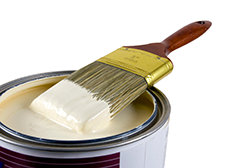

Examples of products that contain toluene.
| SUBSTITUTION | Use products that do not contain toluene. Read product labels and MSDSs or SDSs to see if toluene is listed as an ingredient.
|
| CONTROLS
|
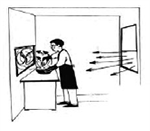
Make sure that there is general air flow (ventilation) to carry toluene away from the work area. For stationary work, use local exhaust ventilation (such as a snorkel, fume hood, work table with down-draft or side-draft ventilation). Local exhaust should vent to the outdoors or have a charcoal filter that is changed as recommended by manufacturer.
|
| WORK PRACTICES
|
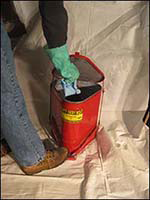
Use the following precautions when working with toluene and products that contain toluene:
|
| PERSONAL PROTECTIVE EQUIPMENT (PPE)
|
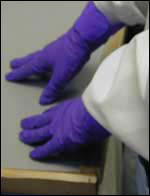
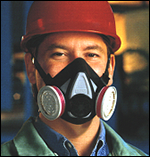
Use the following personal protection equipment when working with toluene and materials that contain toluene:
|
If airborne exposures cannot be kept below permissible exposure limits (PELs) and respiratory protection must be worn, the employer must have a written respiratory protection program and:
|
How Can OSHA Help?
Workers have the right to a safe and healthy workplace. If you think that your job is unsafe or if you have questions, contact OSHA at 1-800-321-OSHA (6742). It's confidential. We can help. For information on workers' rights, employer responsibilities, or how to file a complaint, visit OSHA's Workers page at www.osha.gov/workers/index.html.
Employers can contact OSHA's free and confidential Consultation Program to help determine if there are hazards (including toluene) in their workplace. On-site consultations do not result in citations or penalties. For more information, visit OSHA's website at www.osha.gov or call 1-800-321-6742; TTY 1-877-889-5627. We will keep your information confidential. We are here to help you.
Twenty-seven states operate their own occupational safety and health programs approved by OSHA. States enforce similar standards that may have different or additional requirements. A list of state plans is available at www.osha.gov/dcsp/osp/index.html.
This InfoSheet is not a standard or regulation, and it creates no new legal obligations. It contains recommendations as well as descriptions of mandatory safety and health standards. The recommendations are advisory in nature, informational in content, and are intended to assist employers in providing a safe and healthful workplace. The Occupational Safety and Health Act requires employers to comply with safety and health standards and regulations promulgated by OSHA or by a state with an OSHA-approved state plan. In addition, the Act's General Duty Clause, Section 5(a)(1), requires employers to provide their employees with a workplace free from recognized hazards likely to cause death or serious physical harm.

U.S. Department of Labor

DTSEM OSHA 3646-03 2013
* The Hazard Communication standard was revised in 2012. Safety Data Sheets (SDSs) will replace MSDSs. SDSs have a standardized 16 section format with specific information required in each section. Manufacturers and importers have until June 1, 2015 to replace MSDSs with SDSs. Until then, both MSDSs and SDSs may be received by employers.
**Accessibility Assistance: Contact the OSHA Directorate of Technical Support and Emergency Management at (202) 693-2300 for assistance accessing PDF materials.