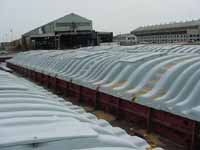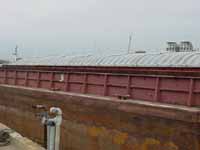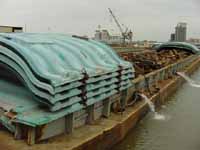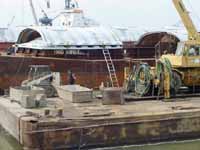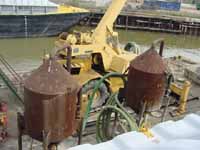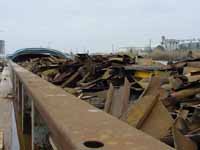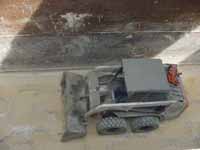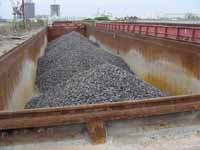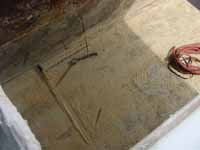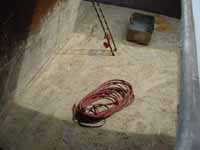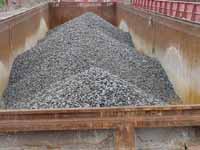
Figure 1: Bulk material in barge.
Dry bulk cargo barge cleaning is the process of removing residual cargo and cleaning the spaces (such as hoppers or holds) and/or tanks on the barge in order to load a new or different cargo, inspect, or repair. Cleaning may be conducted on a barge while at a pier, in a drydock, while beached, or at anchor. The cleaning process normally includes:
Each of these steps include many of the same hazards. These hazards should be evaluated throughout the barge cleaning process.
Typical cargoes carried by dry bulk cargo barges include:
- Grain and grain products
- Coal
- Petroleum coke
- Fertilizer
- Scrap metal
- Ores
- Aggregate (rock, cement, sand, gravel)
Cleaning typically consists of:
- Mechanical (such as front-end loaders, cranes, buckets, and vacuums) or manual (such as push brooms, wheelbarrows, buckets, shovels) removal of residual cargo,
- Washing of holds and/or tanks with hoses, and
- Removal of wash water with pumps and/or siphons.
Note: Confined space entry is one of the leading hazards associated with barge cleaning. Review the Ship Repair: Confined or Enclosed Spaces and Other Dangerous Atmospheres chapter for information on how to protect workers from this hazard.