Chemical cargo barge cleaning is the process of removing residual cargo and cleaning the tanks on the barge in order to load a new or different cargo, inspect, or repair. Cleaning may be conducted on a barge while at a pier, in a drydock, while beached, or at anchor. The cleaning process normally includes:
Each of these steps include many of the same hazards. The most important hazards are to due flammable materials, and inhalation or skin contact from chemical exposures. It is important to
address Hazard Communication [29 CFR 1915.1200], personal protective equipment [29 CFR 1915 Subpart I], and the exposure limits in 29 CFR 1915 Subpart Z. These hazards should be evaluated throughout the barge cleaning process.
Additional Resources:
- NIOSH Pocket Guide
- NFPA 306, Control of Gas Hazards on Vessels. National Fire Protection Association.
- 33 CFR, Subpart 154 - Facilities Transferring Oil or Hazardous Materials in Bulk. This regulation is available on-line through the GPO Access website.
- 154.735 - Safety Requirements. U.S. Coast Guard. This regulation allows for the incorporation of the International Safety Guide for Oil Tankers & Terminals (ISGOTT) guide for tank cleaning under 33 CFR 154.735(s)(1-3).
- OCIMF International Safety Guide for Oil Tankers & Terminals. International Chamber of Shipping (ICS). This document outlines the international standard for cleaning tanks.
- Safety Guidelines For Tank Vessel Cleaning Facilities. American Waterways Shipyard Conference. This guideline was created by the American Waterways Shipyard Conference (AWSC). AWSC merged with the Shipbuilders Council of America (SCA) in 1999.
Note: Confined space entry is one of the leading hazards associated with barge cleaning. Review the Ship Repair: Confined or Enclosed Spaces and Other Dangerous Atmospheres chapter for information on how to protect workers from this hazard.
| Step 1: Pre-Planning and Preparing to Clean |
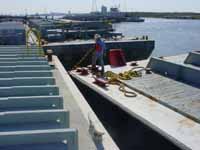 Figure 1: Mooring the barge and standing away from the edge.
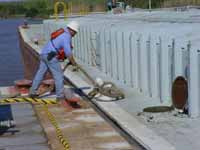 Figure 2: Barge in the process of mooring up.
Includes securing the barge, reviewing the structural plan of the vessel, preventing static discharge, connecting hoses, ballasting, and identifying hazardous materials.
The following safety and health information should be reviewed:
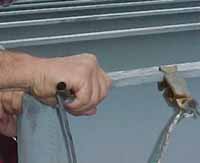 Figure 3: Connecting grounding static charge prevention.
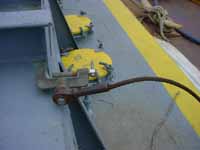
Figure 4: Barge grounding clamp and cable.
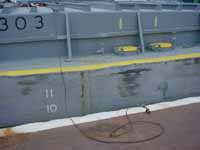 Figure 5: Barge grounding clamp and cable.
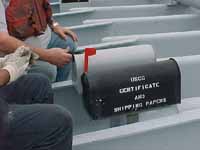
Figure 6: Mailbox on barge for MSDS information.
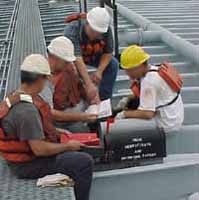 Figure 7: Workers reviewing MSDS information before work begins.
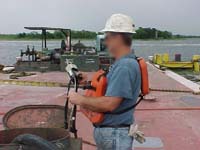 Figure 8: Shipyard Competent Person (SCP) checking atmosphere prior to entry.
 Back to Top Back to Top |
| Step 2: Setup for Cleaning |
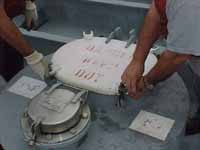 Figure 9: Releasing pressure and opening cover.
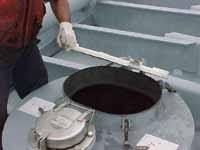 Figure 10: Opening cover after pressure release.
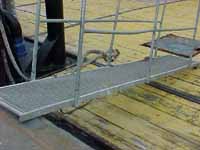 Figure 11: Access ramp to barge.
The following safety and health information should be reviewed:
Additional Resources:
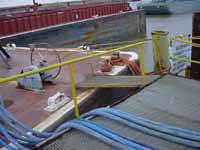 Figure 12: Access walkway to barge.
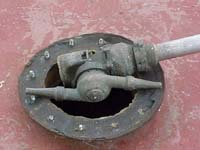 Figure 13: Part of a butterworth nozzle used for tank cleaning.
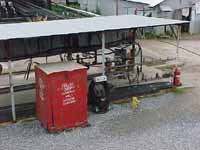 Figure 14: Fire station.
|
| Step 3: Cleaning |
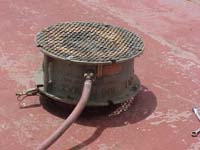 Figure 15: Corpus blower with proper guards and grounded with alligator clip ventilating fuel tank.
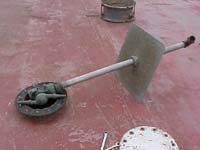 Figure 16: Butterworth nozzle used for tank washing.
The following safety and health information should be reviewed:
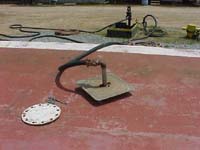 Figure 17: Butterworth nozzle used for tank washing.
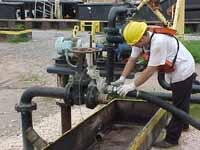 Figure 18: Worker hooking up suction hose.
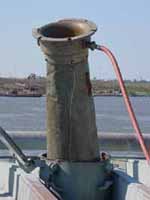 Figure 19: Blower venting a tank.
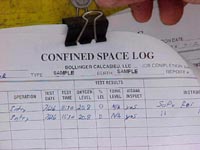 Figure 20: Confined Space Log.
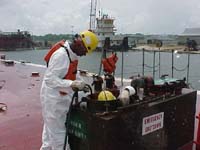 Figure 21: Tank entry and hold watch.
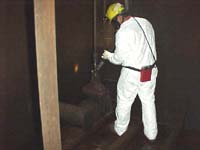 Figure 22: Washing barge tank.
|
| Step 4: Completion |
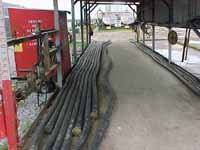 Figure 23: Suction hose properly stored out of the way.
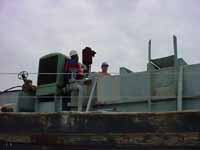 Figure 24: Final inspection.
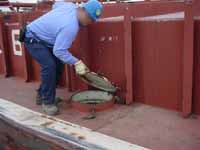 Figure 25: Barge void space hatch being opened or closed.
The following safety and health information should be reviewed:
Back to Top |
|