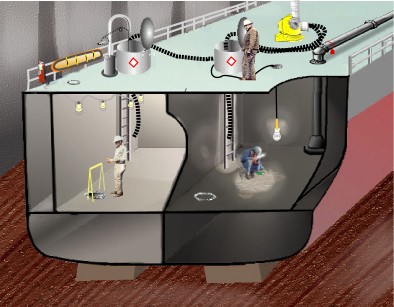
Figure 1: Illustrates confined or enclosed space entry where PPE is required.
The OSHA
Hierarchy of Controls
- Engineering Controls
- Administration Controls
- Personal Protective Equipment (PPE)
Typical
PPE for shipyard workers includes:
- Hard hat,
- Safety glasses,
- Safety boots (hard toed),
- Gloves,
- Sleeved shirt,
- Long pants (no shorts or cut-offs),
- Hearing protection, and
- Flashlight or lightstick.
After the initial entry testing has been completed by the
Shipyard Competent Person (SCP) or Certified Marine Chemist (CMC), appropriate
personal protective equipment (PPE) must be
selected for the workers. PPE selection is based on hazard assessment, results
of initial testing, and type of work to be conducted.
Periodic retesting may be required, depending
on operations and space
conditions.
In addition to typical shipyard PPE, if there are toxic or
corrosive coatings or residues, shipyard personnel may specify additional
protective clothing and respiratory protection. In shipbreaking, there are
specific PPE requirements for operations, such as asbestos, lead, or cadmium
removal.
| Protective Clothing, Gloves, and Boots |
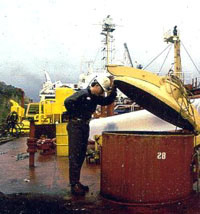
Figure 2: SCP or CMC preparing tank for entry.
This equipment is to protect the worker
entering confined or enclosed spaces from toxic or corrosive
residues or sludge that are present on decks, ladders, or bulkheads that may contact
their clothing or skin. Identification of toxic and corrosive materials is
essential to the selection of appropriate PPE, including:
- Disposable coveralls
- Chemical-resistant coveralls
- Water-resistant clothing (such as rain gear)
- Chemical-resistant gloves
- Chemical-resistant boots
For more detailed information,
review Hand
and Body Protection.
 Back to Top Back to Top |
| Respiratory Protection |
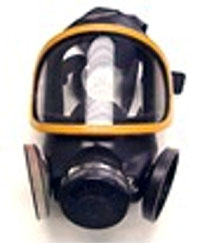
Figure 3: Full-face respirator.
- The appropriate respiratory protection for the worker
must be established by air monitoring or work to be preformed to determine the identification
and concentration of air contaminants. [29 CFR 1915.12]
- Consideration should be given to previous contents (for example cargo, fuel,
oxidation/rust, etc.) as well as other environmental hazards.
- Supplied air respirators may be required if the concentration of toxic
vapors, oxygen, or toxic gases are unknown or at IDLH levels. If this is
the case, a buddy system is required. [29 CFR 1910.134(d)(2)]
- Work with lead, asbestos, and cadmium have specific respiratory
protection requirements. See
Typical
Health Hazards.
For more detailed
information, review Respiratory
Protection.
Back to Top |
|