| Use of Personal Fall Protection Systems |
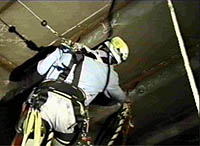 Figure 1: Worker protected with a retractable lifeline and body harness.
- Falls caused by failure to use fall protection
- Injuries due to improper use of fall protection equipment
Requirements and Example Solutions:
Training
- Before use, workers must be trained to understand [29 CFR 1915.159(d),
29 CFR 1915.160(d)]:
- The application limits (for example maximum permitted free falls, distance needed below to stop
before hitting lower levels or objects, minimizing swing falls,
etc.) of the equipment
- Proper hook-up, anchoring, and
tie-off techniques
- Proper use, inspection, and
storage of equipment
- Personal fall protection systems must not be used for other
purposes such as hoisting materials. [29 CFR 1915.159(c)(9)]
Inspection
Anchorage
- Workers must attach to an anchorage of sufficient strength (5,000
pounds). [29 CFR 1915.159(a)(9)]
- Workers must use anchorage points independent of the scaffold
supporting system. [29 CFR 1915.159(a)(8)]
- Positioning device systems must be secured to an anchorage capable
of supporting at least twice the potential impact load of a worker's
fall. [29 CFR 1915.160(a)(3)]
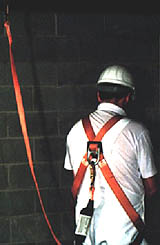 Figure 2: Worker protected with lifeline and shock absorber.
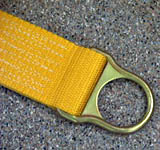 Figure 3: D-Ring and Snap-hook.
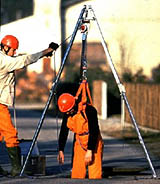 Figure 4: Work being rescued from fall in enclosed space.
Lifelines and Lanyards
- Each worker must be provided with their own separate vertical
lifeline. [29 CFR 1915.159(b)(1)]
- Horizontal lifelines must be designed, installed, and used under
the supervision of a qualified person. [29 CFR 1915.159(b)(5)]
- Workers must use systems that are rigged to prevent free fall of
more than six feet or contact with the lower level. [29 CFR 1915.159(b)(7)]
- Lifelines and lanyards must be protected against damage such as
cuts, abrasions, burns (hot work), acids, and solvents. [29 CFR 1915.159(c)(4)]
Snap Hooks and D-Rings
- Workers must use locking snaphooks. [29 CFR 1915.159,
29 CFR 1915.160(a)(4)].
- Snaphooks, unless designed for such connections, must not be
connected to: [29 CFR 1915.159(a)(6)]
- Webbing, rope or wire rope
- Other snaphooks
- D-rings to which other snaphooks
or connectors are attached
- Horizontal lifelines
- Other objects such as eye bolts
that are incompatible
Rescue
 Back to Top Back to Top |
| Design Criteria for Personal Fall Protection Systems |
Potential Hazards:
- Falls due to anchorage or equipment failure
- Injuries (for example damage to internal organs, fractures, abrasions) due to the use of improper fall protection equipment
Requirements and Example Solutions:
- Personal fall protection systems must meet the design, strength, and testing requirements for the equipment. [29 CFR 1915.159, 29 CFR 1915.160, and Subpart I Appendix B]
- Design requirements include:
- Maximum permitted arrest forces
- Minimum system strength
- Maximum permitted stopping distances
- Component strength
- Proof testing
- Corrosion-resistant materials
- Compatibility requirements
Additional Resources
Back to Top |
|