
Figure 2: Wrap-around safety glasses.
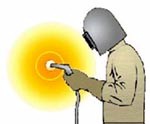
Figure 4: Welding hood.

Figure 1: Safety glasses with side shields.

Figure 3: Safety goggles.
Eye and face protection is used to protect the eyes and face of
workers from
flying particles, molten metal, chemicals, welding arc, or bright light (such
as
radiant energy, UV, or infrared). [29 CFR 1915.153(a)(1)] Protection may
include protective glasses, goggles,
and
face shields. These devices must meet the ANSI standard for eye and face
protection. [ANSI Z87.1]
The OSHA
Hierarchy of Controls
- Engineering Controls
- Administration Controls
- Personal Protective Equipment (PPE)
| General Guidelines |
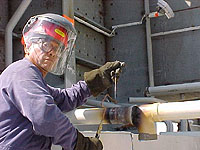
Figure 5: Worker brazing with face shield and safety glasses.
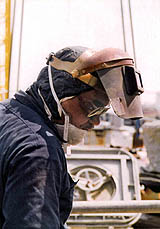
Figure 6: Worker with welding hood
and safety glasses.
Eye and face injuries may result from:
- Contact with flying particles, molten metal, chemicals, welding arc,
lasers or radiant energy (such as bright light, UV, infrared).
- Not wearing safety glasses when welding shields are raised
to inspect welds or use chipping hammer or needle gun.
- Equipment failures due to not meeting nationally recognized standards
Additionally, obscured vision due to dirty or scratched lenses
may cause workers injuries (such as trips, falls, struck-by,
collisions).
Requirements and Example Solutions:
- Face shields or welding helmets (for example hoods) should
be worn only over primary eye protection such as safety glasses or
goggles.
[1915 Subpart I App A 8(c) and 8(i)]
- Protective equipment can be clear or shaded, depending upon the
type and amount of shielding needed to
protect workers' eyes. [Table for Filter Lenses for Protection Against Radiant
Energy, and 29 CFR 1915.153(a)(4)]
- Safety glasses should include
optical correction for workers who need corrective lenses, otherwise, cover lens or
goggles must be provided. [29 CFR 1915.153(a)(3)]
- Glasses or goggles must provide protection from hazards such
as particles, objects, radiation, or liquids entering the eye
from the sides as well as the front. Side shields (for example wrap-around, clip-on,
slide-on) must be used. [29 CFR 1915.153(a)(2)]
- Metal-frame protective eyewear should not be used when electrical
hazards may be present. [29 CFR 1915 Subpart I App A
8(g)]
- Ensure that eye protection is cleaned frequently and
replaced when necessary.
Additional Resources:
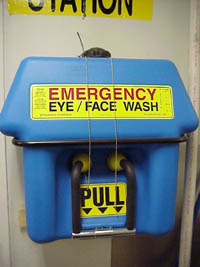 Figure 7: Emergency eye wash station.
- Fixed or portable eye wash stations/safety showers should meet ANSI Z358.1-1998: Emergency Eye Wash and Shower Equipment.
 Back to Top Back to Top |
|