Slides 1-10
Slide 11
Slide 12
Slide 13
Slide 14
Slide 15
Slide 16
Slide 17
Slide 18
Slide 19
Slide 20
Slides 21-30
Slides 31-40
Slides 41-46
-
TEXT VERSION OF SLIDE:
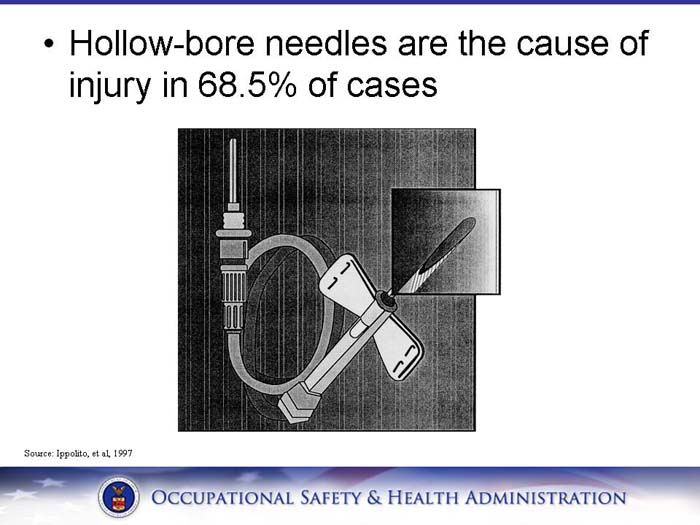
- Hollow-bore needles are the cause of injury in 68.5% of cases
Type: Text and Picture Slide
Content:
[Includes illustration of hollow-bore needles.]
Source: Ippolito, et.al, 1997
Speaker Notes:
According to the research data, hollow-bore needles are the cause of injury in 68.5% of cases.
Hollow-bore needles (the type of needle used for giving injections or drawing blood) also are implicated as the devices most often associated with the transmission of bloodborne pathogen infections, because the blood remaining inside the bore of the needle after use contains a larger volume of virus than the relatively small amount of blood remaining on the outside of a solid core needle (i.e., a suture needle).
The amount of blood the health care worker is exposed to during the exposure event is one of the risk factors assessed to determine the type of post-exposure prophylaxis needed.