
- U.S. Department of Labor
- Occupational Safety and Health Administration
- Directorate of Technical Support and Emergency Management
- Office of Science and Technology Assessment
Hazards when Purging Hydrogen Gas-Cooled Electric Generators
Safety and Health Information Bulletin
SHIB 01-22-2016
This Safety and Health Information Bulletin is not a standard or regulation, and it creates no new legal obligations. The Bulletin is advisory in nature, informational in content, and is intended to assist employers in providing a safe and healthful workplace. Pursuant to the Occupational Safety and Health Act, employers must comply with hazard-specific safety and health standards and regulations promulgated by OSHA or by a state with an OSHA-approved state plan. In addition, pursuant to Section 5(a)(1), the General Duty Clause of the Act, employers must provide their employees with a workplace free from recognized hazards likely to cause death or serious physical harm. Employers can be cited for violating the General Duty Clause if there is a recognized hazard and they do not take reasonable steps to prevent or abate the hazard. However, failure to implement any recommendations in this Safety and Health Information Bulletin is not, in itself, a violation of the General Duty Clause. Citations can only be based on standards, regulations, and the General Duty Clause.
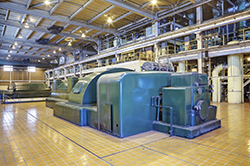
Figure 1: Electrical power turbine generator set.
Source/Copyright: iStock - Bank Photos
Introduction
Many electric power plants now use hydrogen gas-cooled electric generators versus air- or water-cooled generators. To prevent injury or fatality, employers must ensure hydrogen gas is completely purged from generator housings and bushing boxes before conducting preventive, predictive, or emergency maintenance (29 CFR 1910.146). Employers should include all manufacturer recommendations in written purging procedures.
Infrequent procedures such as purging hydrogen gas from electric generators and bushing boxes call for employers to pay special attention to safety. Employers must provide adequate training and ensure that workers comply with safe work practices and written procedures before beginning the task. This SHIB highlights this need and includes a case study about a fatal flash fire that resulted from inadequately purging a hydrogen gas-cooled electric generator housing and bushing box.
Case Study: Fatal Flash Fire
In 2011, inadequate hydrogen gas purging resulted in a fatal flash fire during a turbine generator repair. Three electrical power generation units each used a boiler to deliver steam to a turbine generator. Hydrogen gas cooled both the generator housing and its bushing box through connecting paths. (See Figure 2)
Terminology
Bushing box is an attached “box” or housing that contains generator lead terminals, often located at the generator casing’s base.
Flash fire occurs when a fuel diffused in air contacts an ignition source, creating a rapidly moving flame front for three seconds or less.
Minimum ignition energy is the minimum energy amount required to ignite a combustible vapor, gas, or dust cloud.
Terminals are devices attached to electrical conductors to make electrical connections.
One turbine generator was taken offline because workers detected hydrogen contamination and suspected a leak. They used a portable leak detector and located a leak where the terminal plate was bolted to the bushing box. Repair required workers to enter through a bushing box man-way. Prior to removing the bushing box man-way cover, workers purged the generator housing with carbon dioxide (CO2) and then with ambient air. CO2 is used first to prevent explosions or flash fires that could occur with a hydrogen-air mixture.
After purging, the man-way cover was removed, the workers tested for hydrogen at a fixed location, and one worker entered the confined space with an electric drop light and an electric fan. A flash fire erupted, and the worker was fatally burned.
OSHA investigators identified the following unsafe work practices as potential flash fire causes:
- According to the employer’s written procedures based on internal volume, twelve CO2 gas cylinders are needed to fully purge the generator housing. Only six CO2 cylinders were released, not enough to fully purge the generator.
- A fixed gas detector was used to test for hydrogen after purging rather than a portable gas monitor, as required by the employer’s written procedures. As a result, hydrogen gas was measured from the generator housing base rather than from the generator housing roof where the hydrogen vented and would naturally accumulate since it is lighter than air. This measurement did not identify the residual hydrogen.
- The confined space assessment was conducted three days before the bushing box man-way cover was removed and the worker entered the space. The space was sealed and closed for those three days, which affected the original assessment.
- A fire hazard existed from using tools unsafe for this environment (e.g., electric drop light and electric fan) rather than tools rated as intrinsically safe.
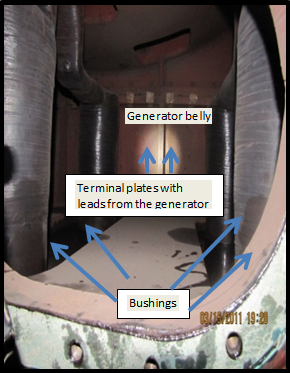
Figure 2: Bushing box with man-way cover removed.
Source: OSHA
Hazards from Purging Hydrogen Gas-Cooled Electric Generators
Work in the typical electric generator housing or bushing box usually involves permit-required confined space entry procedures including atmospheric checks for oxygen concentration and flammable gases such as hydrogen. If hydrogen gas remains in any area in a concentration from 4% to 75% (the lower and upper flammability limits) in air, then the atmosphere in that area is flammable (see Figure 3). The wide flammability range increases susceptibility to flash fires in particular. OSHA defines an atmosphere with greater than 10% of its lower flammability limit as immediately dangerous to life and health, and entry is prohibited.
Hydrogen gas is lighter than ambient air and can concentrate in overhead areas, making it difficult to detect. Because hydrogen gas has a low minimum ignition energy, it can ignite with any small ignition source—even an electrostatic spark from a worker’s movement or a tool touching a surface. In addition, employers must continuously monitor the area where the workers are located because hydrogen gas is colorless, odorless, and tasteless, and worker asphyxiation may occur if this gas is not completely purged.
These hazards differ from the hazards associated with a hydrogen gas escape or leak, which could cause an explosion when it reacts with ambient air.
Workers must also take electric power generators offline and follow the established written safety procedures to prepare the equipment for entry.
Preventing Injuries when Purging Hydrogen Gas-Cooled Electric Generators
OSHA recommends taking the following actions to prevent worker injuries or fatalities when purging generator housings and bushing boxes:
- Train workers on hydrogen gas purging procedures and the implementation sequence, and the hazards associated with hydrogen gas (29 CFR 1910.1200(h)).
- Develop and implement written procedures for working in confined spaces (29 CFR 1910.146(c)(4)-(5) & (g), as well as enclosed spaces related to electric power transmission, generation and distribution (29 CFR 1910.269(e)).
- Review and update procedures for purging generators to ensure they completely purge hydrogen with carbon dioxide or other suitable inert gas, and then purge that gas with ambient air to create a safe, inert atmosphere.
- Follow the equipment manufacturer’s recommendations when establishing written purging procedures (e.g., housing capacity, purge gas volume).
- Place detectors in areas where hydrogen gas could accumulate. Follow a detailed and accurate piping and instrumentation diagram to identify areas where residual hydrogen gas may accumulate due to inadequate purging.
- Test atmospheric conditions in the permit space before authorizing entry and verify that acceptable entry conditions exist during the entire operation (29 CFR 1910.146(d)(3)(vi) & (d)(5)(i)). Verify that no hydrogen gas is present using fixed and portable hydrogen monitoring equipment and real-time direct reading instruments.
- Establish and implement ignition control procedures.
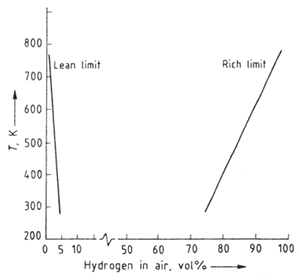
Figure 3: Hydrogen flammability diagram
Source/Copyright: Swiss Hydrogen Association
(http://hydropole.ch/en/hydrogen/abouth2/)
Employers must comply with the OSHA standards (see OSHA Standards box for applicable standards).
Industry consensus standards and additional resources include:
- National Fire Protection Association (NFPA) 2, Hydrogen Technologies Code
- NFPA 70, National Electric Code
- NFPA 55, Compressed Gases Code
- Department of Energy Hydrogen and Fuel Cells Program
- NASA Hydrogen Topics Page
How OSHA Can Help
OSHA has compliance assistance specialists located in most OSHA offices throughout the nation who can provide information to employers and workers about OSHA standards, short educational programs on specific hazards, or OSHA rights and responsibilities, as well as information on additional compliance assistance resources. Contact your local OSHA office for more information.
OSHA's Consultation Service offers free and confidential advice to private-sector employers to help them identify and correct hazards, with priority given to small employers with the most hazardous operations, or in the most high-hazard industries. Consultation services are separate from enforcement activities. To locate the OSHA Consultation program nearest you, call 1-800-321-6742 (OSHA) or visit OSHA's Small Business web page: http://www.osha.gov/dcsp/smallbusiness/index.html.
OSHA Standards
- 29 CFR Part 1910.103, Hydrogen
(overview of OSHA standards pertaining to hydrogen: osha.gov/dep/greenjobs/hydrogen_standards)
- 29 CFR Part 1910.146, Permit-Required Confined Spaces
- 29 CFR 1910.146 Appendix B, Procedures for Atmospheric Testing
- 29 CFR Part 1910.147, Lockout/Tagout of Energy Sources
- 29 CFR Part 1910.269, Electric Power Generation, Transmission, and Distribution
- 29 CFR Part 1910.303, Electrical Standards
- 29 CFR Part 1910.307, Hazardous (classified) Locations
- 29 CFR 1910.1200, Hazard Communication
Workers' Rights
Workers have the right to:
- Working conditions that do not pose a risk of serious harm.
- Receive information and training (in a language and vocabulary they understand) about workplace hazards, methods to prevent them, and the OSHA standards that apply to their workplace.
- Review records of work-related injuries and illnesses.
- Receive copies of results from tests and monitoring done to find and measure hazards in their workplace.
- File a confidential complaint with OSHA to have their workplace inspected if they believe there is a serious hazard or that their employer is not following OSHA's rules.
- File a complaint with OSHA if they have been retaliated or discriminated against by their employer as the result of requesting an inspection or exercising any of their other rights under the OSH Act.
Contact OSHA
- For questions or to get information or advice, or to report an emergency, report a fatality or catastrophe, order publications, sign up for OSHA's e-newsletter QuickTakes, or to file a confidential complaint, contact your nearest OSHA office, visit www.osha.gov, or call OSHA at 1-800-321-OSHA (6742), TTY 1-877-889-5627.
Twenty-eight states and territories operate their own occupational safety and health state plans approved by OSHA. State plans may have different or additional requirements. A list of state plans is available at: http://www.osha.gov/dcsp/osp/.