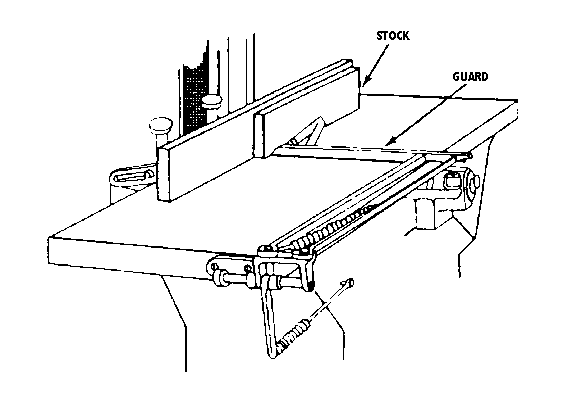
A safety device may perform one of several functions. It may stop the machine if a hand or any part of the body is inadvertently placed in the danger area; restrain or withdraw the operator's hands from the danger area during operation; require the operator to use both hands on machine controls, thus keeping both hands and body out of danger; or provide a barrier which is synchronized with the operating cycle of the machine in order to prevent entry to the danger area during the hazardous part of the cycle.
Presence-Sensing
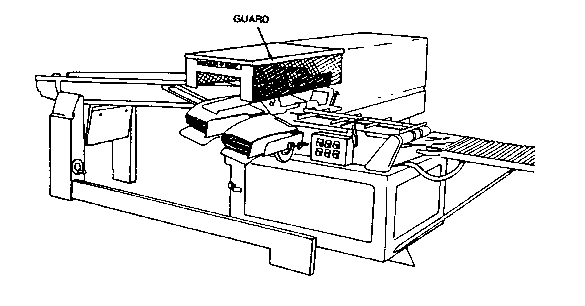
The photoelectric (optical) presence-sensing device uses a system of light sources and controls which can interrupt the machine's operating cycle. If the light field is broken, the machine stops and will not cycle. This device must be used only on machines which can be stopped before the worker can reach the danger area. The design and placement of the guard depends upon the time it takes to stop the mechanism and the speed at which the employee's hand can reach across the distance from the guard to the danger zone.
Figure 32 shows a photoelectric presence-sending device on a part-revolution power press. When the light beam is broken, either the ram will not start to cycle, or, if the cycle has begun, the stopping mechanism will be activated so that the press stops before the operator's hand can enter the danger zone.
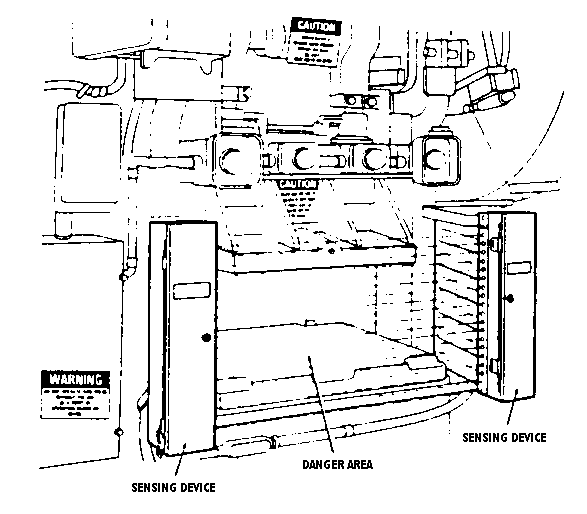
Figure 32. Photoelectric presence-sensing device on power press.
A photoelectric presence-sending device used with a press brake is illustrated in Figure 33. The device may be swung up or down to accommodate different production requirements.
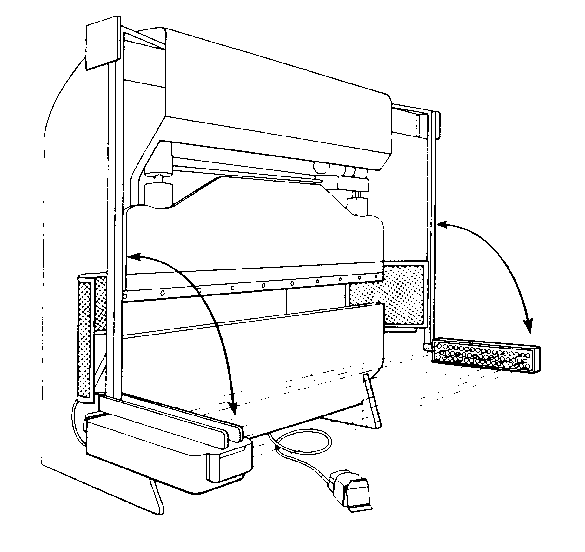
Figure 33. Photoelectric presence-sensing device on press brake
The radiofrequency (capacitance) presence-sending device uses a radio beam that is part of the machine control circuit. When the capacitance field is broken, the machine will stop or will not activate. Like the photoelectric device, this device shall only be used on machines which can be stopped before the worker can reach the danger area. This requires the machine to have a friction clutch or other reliable means for stopping.
Figure 34 shows a radiofrequency presence-sensing device mounted on a part-revolution power press.
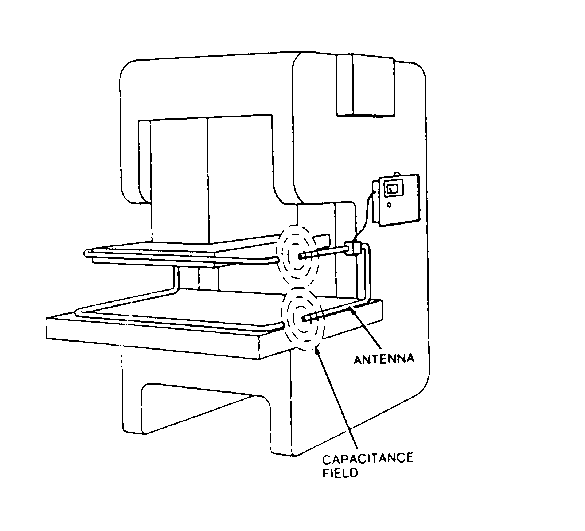
Figure 34. Radiofrequency presence-sensing device on a power press
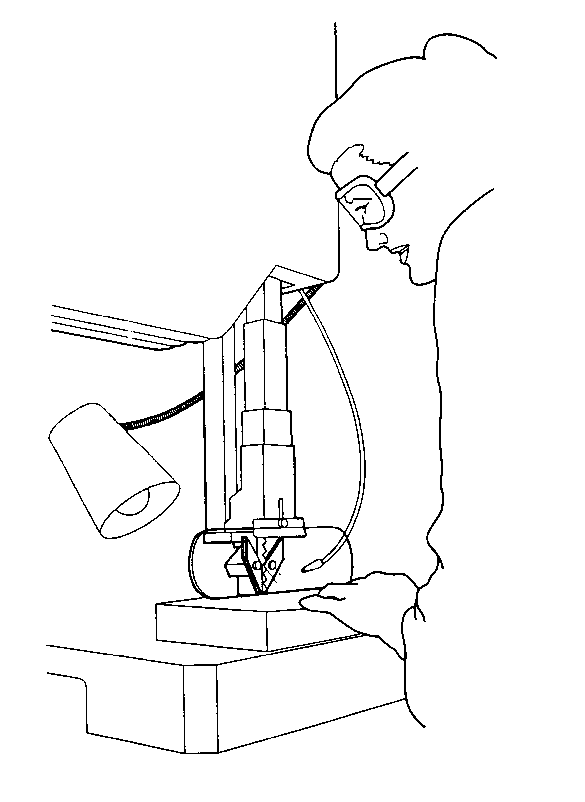
The electromechanical sensing device has a probe or contact bar which descends to a predetermined distance when the operator initiates the machine cycle. If there is an obstruction preventing it from descending its full predetermined distance, the control circuit does not actuate the machine cycle.
Figure 35 shows an electromechanical sensing device on an eyeletter. The sensing probe in contact with the operator's finger is also shown.
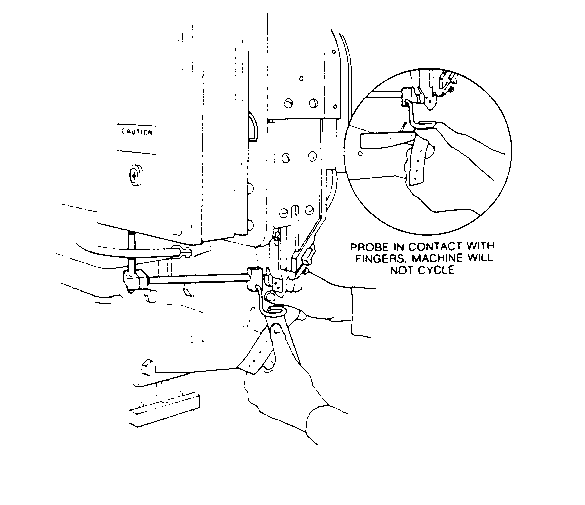
Figure 35. Electromechanical sensing device on an eyeletter.
Pullback
Pullback devices utilize a series of cables attached to the operator's hands, wrists, and/or arms. This type of device is primarily used on machines with stroking action. When the slide/ram is up between cycles, the operator is allowed access to the point of operation. When the slide/ram begins to cycle by starting its descent, a mechanical linkage automatically assures withdrawal of the hands from the point of operation.
Figure 36 shows a pullback device on a straight-side power press. When the slide/ram is in the "up" position, the operator can feed material by hand into the point of operation. When the press cycle is actuated, the operator's hands and arms are automatically withdrawn. Figure 37 shows a pullback device on a smaller press.
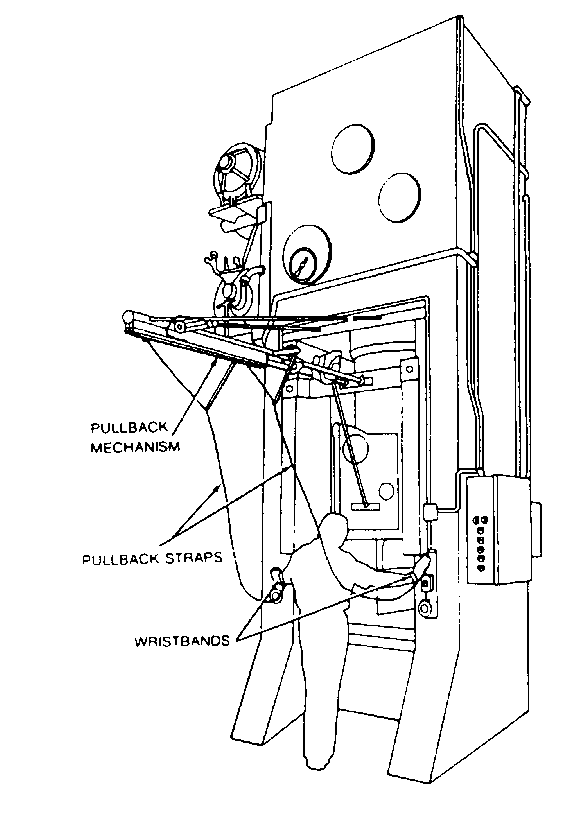
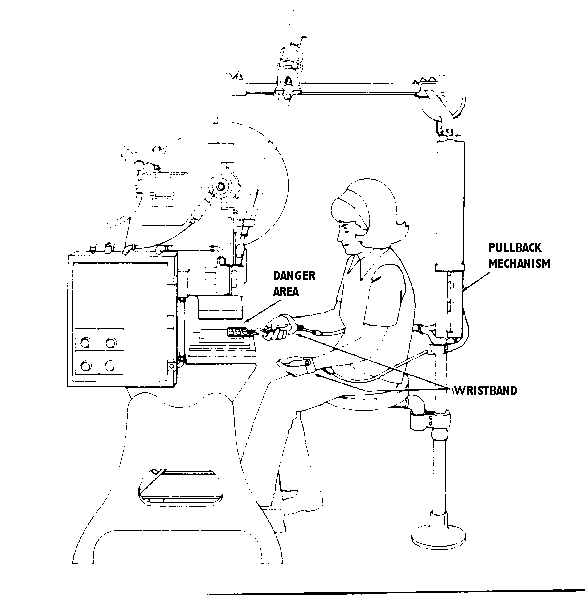
Figure 36. Pullback device on a power press.
Figure 37. Pullback device on a power press.
A pullback device on a press brake is illustrated in Figure 38.
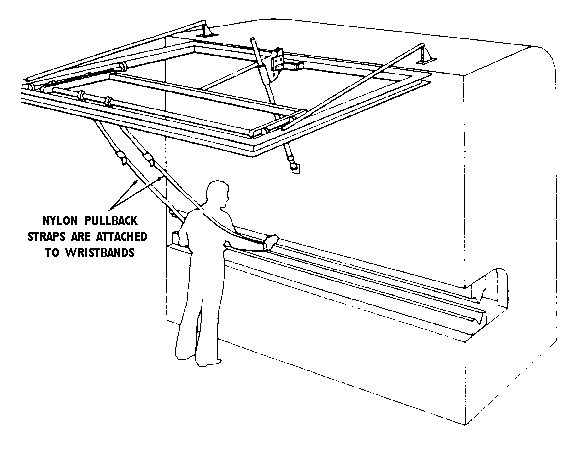
Figure 38. Pullback device on press brake
Restraint
The restraint (holdout) device in Figure 39 utilizes cables or straps that are attached to the operator's hands at a fixed point. The cables or straps must be adjusted to let the operator's hands travel within a predetermined safe area. There is no extending or retracting action involved. Consequently, hand-feeding tools are often necessary if the operation involves placing material into the danger area.
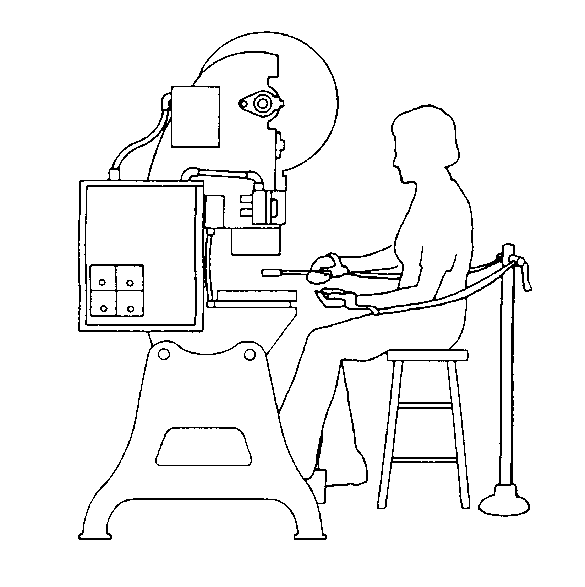
Figure 39. Restraint device on power press
 Page 2 of Chapter 2