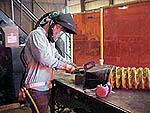
Figure 2: Supplied air hood.
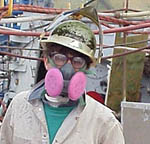
Figure 3: Air-purifying respirator.
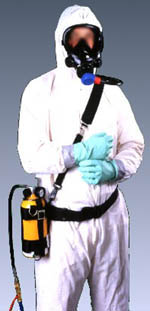
Figure 1: Air-line respirator.
Respiratory protection is used to protect workers from the
effects of toxic, corrosive, or irritant vapors; and gases, dusts, mists, fumes, and
fibers when engineering controls are not adequate or feasible. Respirators used
can range from sample disposable dust masks to more complex supplied air respirators.
OSHA's Respiratory Protection publication (OSHA 3352) and Respiratory Protection eTool can
provide employers and employees information about:
The OSHA
Hierarchy of Controls
- Engineering Controls
- Administration Controls
- Personal Protective Equipment (PPE)
- Respiratory protection program requirements.
- Use of respirators.
- Air monitoring for exposures.
- Selection of respirators.
- Employee training.
- Fit testing of respirators.
- Inspection and maintenance of respirators.
- Medical evaluation of employees using respirators.
- Breathing air requirements.
Note: There are additional PPE
requirements for
health-related
hazards (such as Lead [29 CFR 1910.1025],
Arsenic [29 CFR 1910.1018], Asbestos
[29 CFR 1910.1001],
and Cadmium
[29 CFR 1910.1027]).
| Requirements for Respirators |
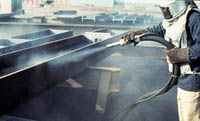
Figure 4: Abrasive blaster with
blast hood.
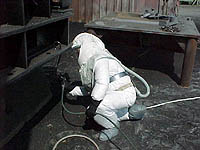
Figure 5: Painter with supplied air respirator.
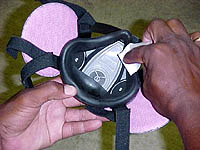
Figure 6: Clean respirator.
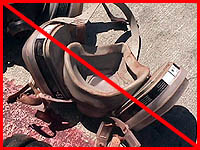
Figure 7: Improper practice - Dirty respirator.
Workers may be exposed to hazardous
atmospheres that result in:
- Being overcome by lack of oxygen.
- Occupational illness due to long-term low-level exposures (for
example
asbestos, silica, lead).
- Acute or systemic illness from exposure to solvents, paints, and
cleaners.
- Acute respiratory damage due to exposure to corrosives (such as
acids, gases, mists).
- Severe illness or even death from inhaling toxic
materials (such as hydrogen sulfide, carbon monoxide).
Requirements and Example Solutions:
Respiratory protection for shipyard employment is covered
by 29 CFR 1910.134, which includes the
following:
- "In the control of those occupational diseases caused by
breathing air contaminated with harmful dusts, fogs, fumes, mists,
gases, smokes, sprays, or vapors, the primary objective shall be to
prevent atmospheric contamination. This shall be accomplished as far
as feasible by accepted engineering control measures (for example,
enclosure or confinement of the operation, general and local
ventilation, and substitution of less toxic materials). When
effective engineering controls are not feasible, or while they are
being instituted, appropriate respirators shall be used pursuant to
this section." [29 CFR 1910.134(a)(1)]
- Respirators must be provided when such equipment is necessary to
protect the health of the worker. [29 CFR 1910.134(a)(2)]
- Respirators which are applicable and suitable for the purpose
intended must be provided [29 CFR 1910.134(a)(2)]
- A respiratory protection program must be established and
maintained. [29 CFR 1910.134(a)(2)]
Specific operations that have additional
requirements include:
Additional Resources:
 Back to Top Back to Top |
Accessibility Assistance: Contact the OSHA Directorate of Technical Support and Emergency Management at (202) 693-2300 for assistance accessing PDF materials.
|