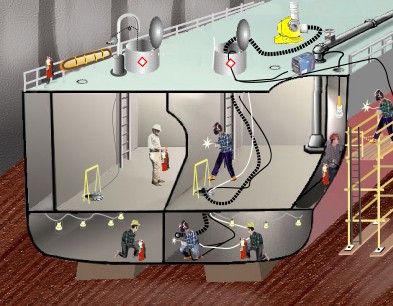
 Figure 1: Illustrates a "safe" set-up for hot work where PPE is required
OSHA hierarchy of controls is:
-
Engineering Controls
-
Administration Controls
-
Personal Protective Equipment
Surface preparation requires preplanning and evaluation of the
area for potential hazards before work is begun. Usually, a Shipyard
Competent Person (SCP), Certified Industrial Hygienist (CIH), or Certified
Marine Chemist (CMC) is needed to help evaluate hazards and select PPE. Additional hazards will exist if work is done in enclosed
or confined spaces (see confined space).
Surface preparation operations present a significant risk
for skin, eye, and respiratory exposure to toxic and corrosive chemicals, as
well as risk of burns, cuts, and lacerations. Surface preparation operations often
require the use of respiratory protection equipment. Employers must comply with
the OSHA respirator standard [29 CFR 1915.154
and
29 CFR 1910.134].
Typical surface preparation operations are as
follows:
Each of these surface prep operations may present unique hazards. Therefore, a
qualified person must select PPE based on the specific operation. Use of appropriate combinations of
the following PPE will provide adequate protection:
Review the
General
Shipyard Worker PPE before
proceeding with this section.
| Abrasive Blasting |
PPE is required when performing abrasive blasting and must
provide protection from the impact of the rebounding abrasive blast
material (for example sand, metal slag) and toxic effects of the abrasive
blast material and coatings (such as paint, grease) being removed. Due to
possible surges of pressure in the hose line and potential static
electricity shocks, fall protection may be necessary. Hearing protection
is important in this operation due to the high noise levels usually
associated with this operation.
For more information, see
Surface Preparation: Mechanical Removers in Ship Repair.
 Back to Top Back to Top |
| Chemical Paint Removers |
PPE is required when using chemical paint removers (such
as methylene chloride,
sodium hydroxide/lye) and must provide protection from skin contact, skin
absorption, and inhalation. Reactions between the cleaner and the material being
removed may produce additional toxic vapors or liquids.
Note: During these operations, it is important to have an emergency eye and
body flushing station.
For more information, see
Surface Preparation: Chemical Removers in Ship Repair.
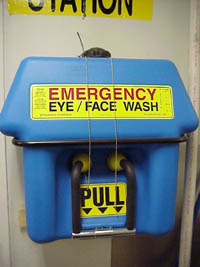
Figure 2: Eye wash
station.
- Fixed or portable eye wash stations/safety showers
should meet ANSI Z358.1-1998: Emergency Eye Wash and Shower
Equipment.
Back to Top |
| Flame Removal |
PPE is required when performing flame removal of hardened coatings
(such as
paint) and must provide protection from the fumes and smoke created from this
process. [29 CFR 1915.34(b)(1)]
For more information, see
Surface Preparation in Ship Repair.
Back to Top |
| Mechanical Paint Removers |
PPE is required when performing mechanical paint removal
(such as by grinding,
needle gunning, pneumatic chipping). Due to high noise, flying particles, and
dust, hearing and eye protection are required and respiratory protection may be
required for all these operations. Due to the sparks produced, by grinding,
protective clothing is required. [29 CFR 1915.152(a) and
(b)] Anti-vibration devices
should be used to reduce the effect of excessive vibration from pneumatic tools.
For more information, see
Surface Preparation: Mechanical Paint Removers in Ship Repair.
Back to Top |
| Hydro-Blasting |
PPE is required when using hydro-blasting as a surface preparation method and
must protect the worker from injury from the hazards of the high-pressure water
stream, often from 1000 to 30000 psi. Due to the pressure reaction of turning the
stream on and off, fall protection may be necessary. Due to high noise, hearing
protection may be required. The PPE should also protect the worker from skin
contact with the material being removed, which in many cases can be toxic.
For more information, see
Surface Preparation in Ship Repair.
Back to Top |
| Solvent Degreasing |
PPE is required when performing solvent degreasing (such
as with xylene, mineral
spirits, acetone) to provide protection from skin contact, skin absorption,
and inhalation. Reactions between the degreaser and the material being removed
may produce additional toxic vapors or liquids.
Note: During these operations, it is important to have an emergency eye and
body flushing station.
For more information, see
Surface Preparation in Ship Repair.
Back to Top |
| Protective Clothing and Hoods |
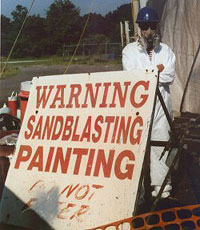
Figure 3: Warning sign for sandblasting.
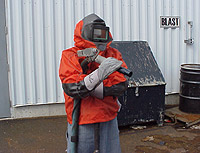
Figure 4: Abrasive blaster with appropriate PPE.
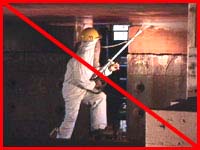
Figure 5: Improper practice: Worker steam cleaning without gloves and face
shield.
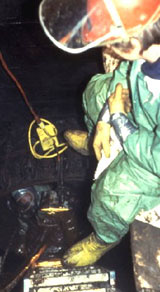
Figure 6: Worker with chemical
protective suits.
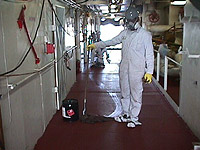
Figure 7: Worker using solvent to degrease deck.
Potential Hazard:
- Chemical absorption or burns due to skin exposure to
chemical cleaner or residues
- Abrasions and amputations from particles generated by
grinding, chipping, and blasting operations
- Hearing loss from excessive noise
- Burns due to contact with steam or hot water
- Burns and amputations from contact with high-pressure steam, water, or air streams from
high-pressure equipment
- Struck-by injuries and falls caused by uncontrolled high-pressure
hoses
- Heat-related illnesses due to a combination of PPE
use, heat-producing equipment, work activity, and
environmental conditions. See
Surface Preparation: Mechanical
Removers - Work Environmental Temperature-Related Hazards.
Requirements and Example Solutions:
- Blasting hood and heavy canvas or leather aprons
are required to protect the head and body of the blaster from the impact of
rebound abrasives. (See Fig 2.) [29 CFR 1915.34(c)(3)]
- Gear should provide skin protection from water,
steam burns and high-temperature water during pressure spraying.
(See Fig 3.)
- Gear must provide skin protection from corrosive and toxic chemicals that may be
spilled, sprayed, or splashed during their
use. (See Fig 4.) [29 CFR 1915.33(a)]
- Attached hoods should
be used and when there is head or neck exposure.
- When respirators are used, hoods should be tightened over the
respirator to prevent interference with the face
seal and allow proper removal of gear.
- Heat stress program should be used
- Leather garments provide
such protection provided that they are free of flammable or combustible
materials such as oil, grease, and solvents.
For more detailed information,
review
Hand
and Body Protection.
Back to Top |
| Respirator Protection |
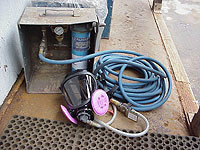
Figure 8: Air-line respirator.
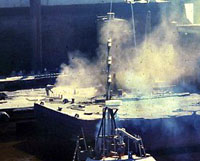
Figure 9: Abrasive blaster on barge
creating large dust cloud.
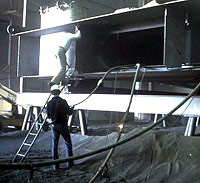
Figure 10: Other workers exposed
to abrasive grit.
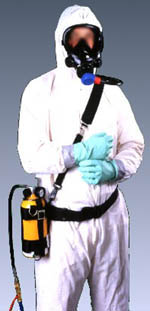
Figure 11: Worker with protective clothing and
air-line respirator.
Potential Hazards:
Respirators protect the lungs and upper respiratory
track from dust, mists, fumes, and vapors that are
associated with the cleaners and residues. Worker
illness may result from:
- Inhalation exposure to toxic or corrosive
chemicals
- Exposure to oxygen-deficient atmospheres
- Exposure to dust (such as silica, lead, and
chromate)
Requirements and Example Solutions:
- Abrasive blasting hoods with supplied breathing air or positive
pressure air helmets are required to be used by blasters when blasting
in enclosed areas. [29 CFR 1915.34(c)(3)(i)]
- Other workers in the blasting area where unsafe concentrations of
abrasive materials and dust are present are required to wear appropriate
respiratory protection (such as air-line or air-purifying respirator).
See Fig
7 & 8. [29 CFR 1915.34(c)(3)(iii)]
- Flame removal of coatings in enclosed spaces requires the use of
supplied air respirators. An air purifying respirator with appropriate
filters can be used when performing this work in the open. Air
monitoring is used to determine the type of respirator required.
[29 CFR 1915.34(b)(1)]
- A supplied-air respirator may be required when grinding on surfaces
containing lead, cadmium, mercury, or beryllium in enclosed spaces, and
air purifying respirators are required for grinding on these metals in
the open air. [29 CFR 1915.34(a)(4)]
- Air-supplied respirators may be necessary to provide
adequate respiratory protection.
- If a half face mask
respirator is used, eye and face protection may also
be required in the form of a face shield and
goggles.
For more detailed
information, review
Respiratory
Protection.
Back to Top |
| Eye and Face Protection |
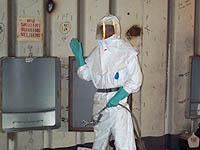
Figure 12: Worker with disposable suit, gloves and face protection.
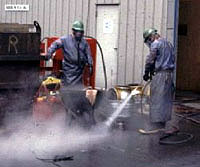
Figure 13: Workers using pressure washing with face protection.
Potential Hazard:
- Chemical absorption or burns due to skin exposure to
chemical cleaner or residues
- Eye and face injury from particles generated by
grinding, chipping and blasting operations
- Worker face and eye exposure to corrosive or
toxic chemicals
that may splash or be sprayed
Requirements and Example Solution:
- Full-face respirators should be used when toxic chemicals
which can be absorbed through the skin are used.
- Face shields are necessary to protect
the face skin outside the respirator if a half face
respirator is used.
- Face shields alone are not for protection for the eyes and safety
glasses must be worn under the face shield for adequate
protection.
For more detailed information,
review Eye
and Face Protection.

Figure 14: Emergency eye/face
wash.
- Fixed or portable eye wash stations/safety showers
should meet ANSI Z358.1-1998: Emergency Eye Wash and Shower
Equipment.
Back to Top |
| Foot Protection |
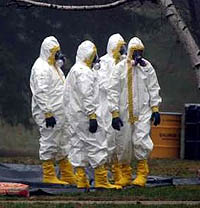
Figure 15: Workers with appropriate foot
protection (such as rubber boots).
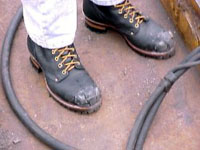
Figure 16: Safety boots.
Potential Hazards:
- Lacerations or amputations due to exposure to
high-pressure water and steam.
- Slips and falls due to slippery surface.
- Foot related illnesses due to wading in water.
- Chemical absorption or burns due to skin
exposure to chemical cleaner or residues.
- Burns due to contact with steam or hot water.
- Hypothermia or frost bite from working in cold
and/or wet conditions. See Cleaning Operations:
Work Environmental Temperature-Related Hazards.
Requirements and Example Solutions:
- Boots (e.g., chemical resistant, waterproof)
should provide skin protection from:
- corrosive and toxic chemicals that may be
spilled, sprayed or splashed during their
use.
- trauma during high-pressure spraying.
- steam burns and high-temperature water.
- prolonged exposure to water and similar
non-hazardous liquids.
- Boots should be
worn with the legs of the protective clothing
over them to prevent liquids from entering the
boots.
- Slip-resistant soled boots should be worn when
working on slippery surfaces.
For more detailed
information, review
Foot
Protection.
Back to Top |
| Hand Protection |
Figure 17: Worker cleaning with chemical-resistant
gloves.
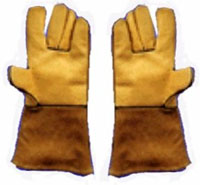
Figure 18: Leather gloves used by blasters.
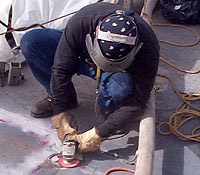
Figure 19: Worker grinding with leather gloves.
Potential Hazards:
- Chemical absorption or burns due to skin exposure to
chemical cleaner or residues.
- Burns due to contact with steam or hot water.
- Frostbite from working in cold and/or wet
conditions. See Cleaning Operations: Work
Environmental Temperature-Related Hazards.
Requirements and Example Solutions:
- Gear should provide skin protection from:
- corrosive and toxic chemicals that may be
spilled, sprayed or splashed during their
use.
- water during pressure spraying.
- trauma during high-pressure spraying.
- steam burns and high-temperature water.
- Gloves should be sealed to the protective
clothing to prevent liquids from entering
the glove.
- For specific operations, inner gloves may be required.
Back to Top |
|