Slides 1-10
Slides 11-20
Slide 21
Slide 22
Slide 23
Slide 24
Slide 25
Slide 26
Slide 27
Slide 28
Slide 29
Slide 30
Slides 31-40
Slides 41-46
-
TEXT VERSION OF SLIDE:
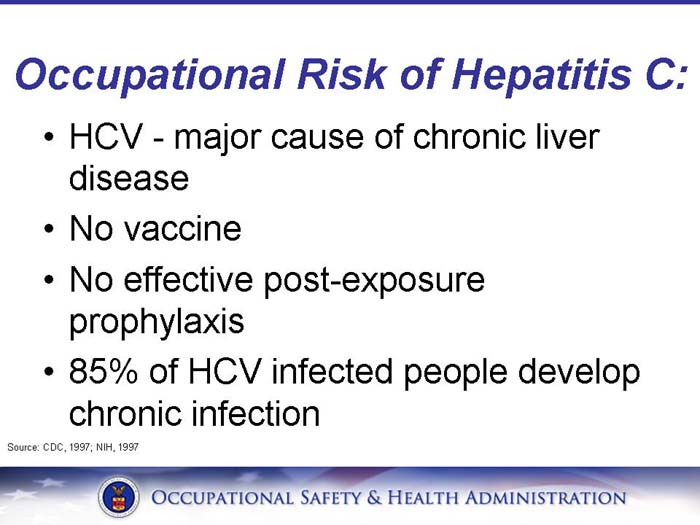
- HCV - major cause of chronic liver disease
- No vaccine
- No effective post-exposure prophylaxis
- 85% of HCV infected people develop chronic infection
Title: Occupational Risk of Hepatitis C:
Type: Text Slide
Content:
Speaker Notes:
What occupational risk does Hepatitis C pose to the health care worker?
Hepatitis C virus infection is a major cause of chronic liver disease in the United States and worldwide. The virus, because of its similarity to HBV, presents an occupational risk to persons whose work activities involve handling human blood and body fluids (CDC, 1997). Some facts about Hepatitis C:
Needlestick injuries are the most common cause of occupational HCV exposure (Hibberd, 1995).
In 1995, an estimated 560 to 1120 cases of HCV infection occurred among health care workers who were occupationally exposed to blood (Alter, 1993).
No vaccine is available for hepatitis C and no effective post-exposure prophylaxis is known at this time (CDC, 1997).
Screening tests for hepatitis C antibodies are commercially available, but interpretation of the results, especially in a post-exposure situation, is limited by several factors:
- A positive result does not distinguish between acute, chronic, or
past infection, and a negative result does not indicate the absence
of acute infection, only the absence of antibodies to HCV.
- False positives are common in populations with a low prevalence of
HCV.
- The tests do not detect HCV antibodies in approximately 5% of people
(CDC, 1997).
[continued on next page]
As many as 85% of all HCV-infected persons develop chronic infection. Persons with chronic hepatitis are at increased risk for cirrhosis and primary hepatocellular carcinoma. Hepatitis C is now the leading reason for liver transplantation in the United States (NIH, 1997).