TEXT VERSION OF SLIDE:
Title: Where Are There Workplace Exposures to Crystalline Silica?
Content:
- Solid dust particles generated from silica-containing materials by
- Handling
- Grinding
- Blasting
- Drilling
- Crushing
- High historical exposures
- Sandblasting
- Mining (regulated by MSHA)
- Tunneling
- Granite cutting
- Sand-casting foundry operations
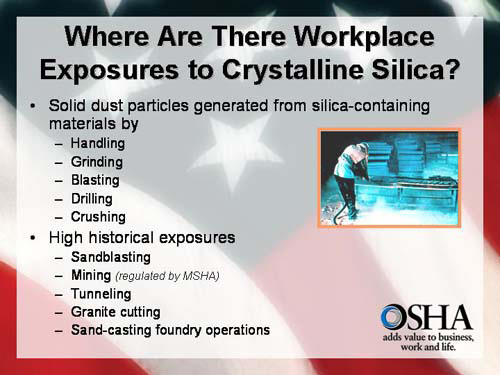
[Includes image of a person sandblasting and the OSHA logo]
Speaker Notes:
From 1990-1999, the industries regulated by OSHA that were most frequently recorded on U.S. death
certificates for silicosis-related deaths were
Construction 13.4%
Blast furnaces, steelworks, rolling and finishing mills 5.8%
Iron and steel foundries 5.5%
Jobs in construction with high silica exposures are
Tunnel and road construction
Excavation and earth moving
Masonry and concrete work
Demolition
Sandblasting
Exposures in general industry include
--Foundries: production of sand-based molds and cores, shakeout and knockout; finishing and
grinding operations
--Manufacturing: use of silica as a raw material to produce concrete, brick, tile, porcelain,
pottery, glass, abrasives, paints, and plastics
--Electronics industry: use of rock quartz
--Agricultural services sector: sorting, grading, and washing areas of food processing operations
for crops such as potatoes and beans
--Food & beverage processing: use of calcined diatomaceous earth (containing cristobalite) as a
filter
--Maintenance and repair of refractory brick linings of rotary kilns and cupola
--Metal refinishing: sandblasting
|
 Printing Instructions | Text Version