Safety + Health Programs
Overview | Management Leadership | Worker Participation | Find & Fix Hazards
Overview
According to the U.S. Bureau of Labor Statistics, the rate of worker deaths and reported injuries in the United States has decreased by more than 60 percent in the past four decades since the Occupational Safety and Health (OSH) Act was passed. However, every year, more than 5,000 workers are killed on the job (a rate of 14 per day), and more than 3.6 million suffer a serious job-related injury or illness.
Serious job-related injuries or illnesses don't just hurt workers and their families, but can hurt business in a variety of ways. Implementing a safety and health program, however, can improve small- and medium-sized businesses' safety and health performance, save money, and improve competitiveness.
Safety and health programs help businesses:
- Prevent workplace injuries and illnesses
- Improve compliance with laws and regulations
- Reduce costs, including significant reductions in workers' compensation premiums
- Engage workers
- Enhance social responsibility goals
- Increase productivity and enhance overall business operations
Resources
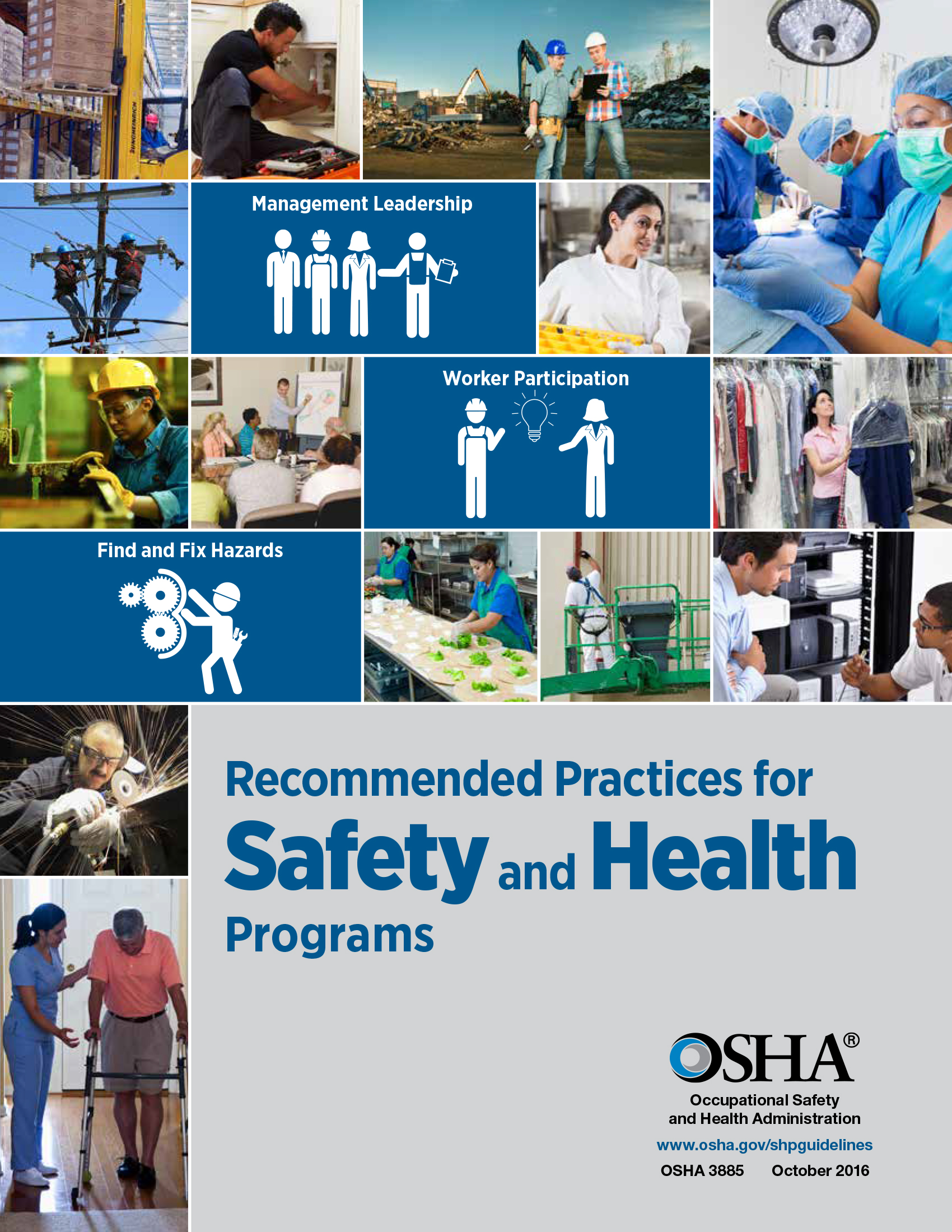


Management Leadership
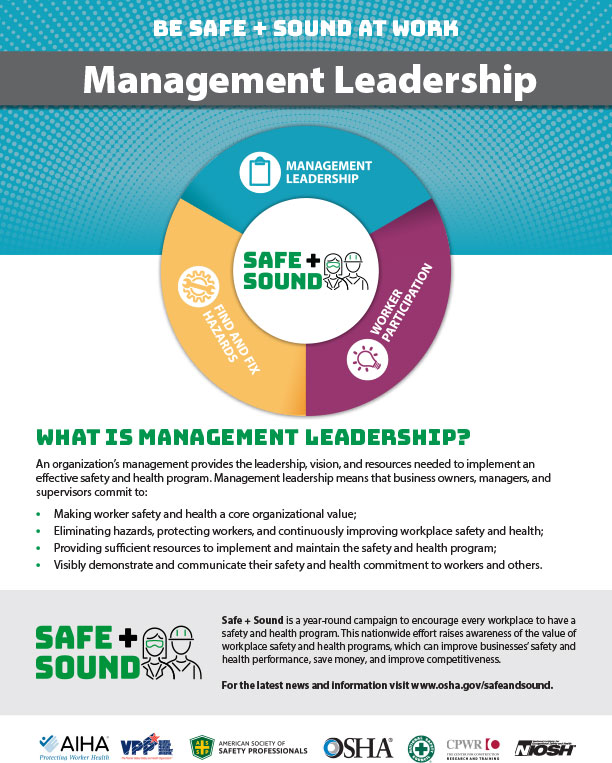
Management leadership means there is a commitment from the top to implementing a program and using it to drive continuous improvement in safety and health.
Why Is It Important?
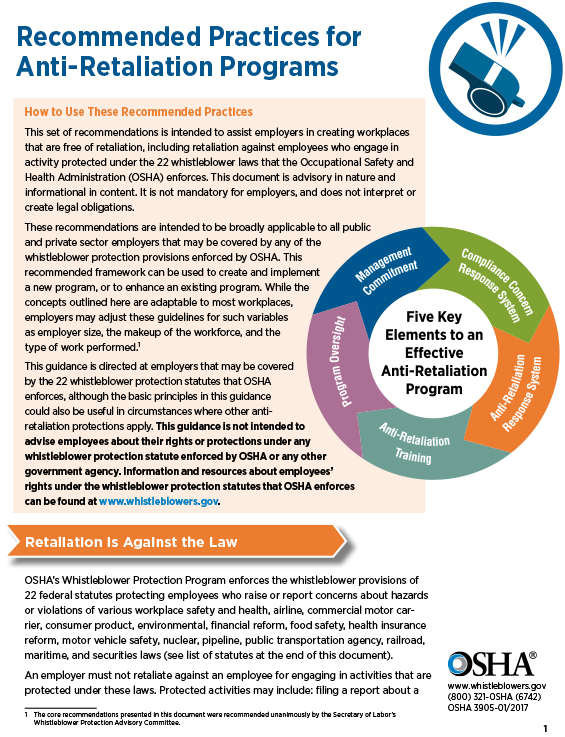
When management leadership is sincere and is supported by actions, workers know that safety and health are important to business success. This means that the steps they take to improve safety and health will be valued by the business.
Top management can demonstrate its commitment in many different ways, including:
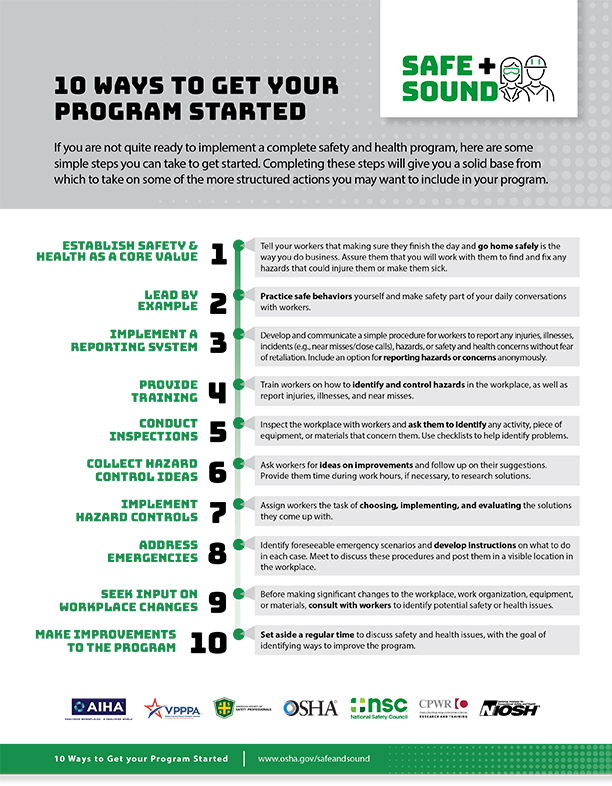
- Developing and communicating a safety and health policy statement.
- Providing the resources needed to implement and operate the program.
- Factoring safety and health into operational planning and decisions.
- Recognizing or rewarding safety and health contributions and achievements.
- Leading by example, by practicing safe behaviors and making safety part of daily conversations.
Resources
Worker Participation
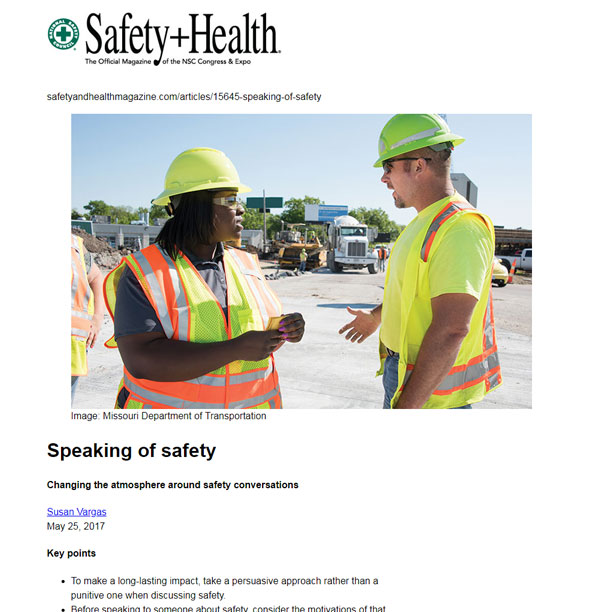
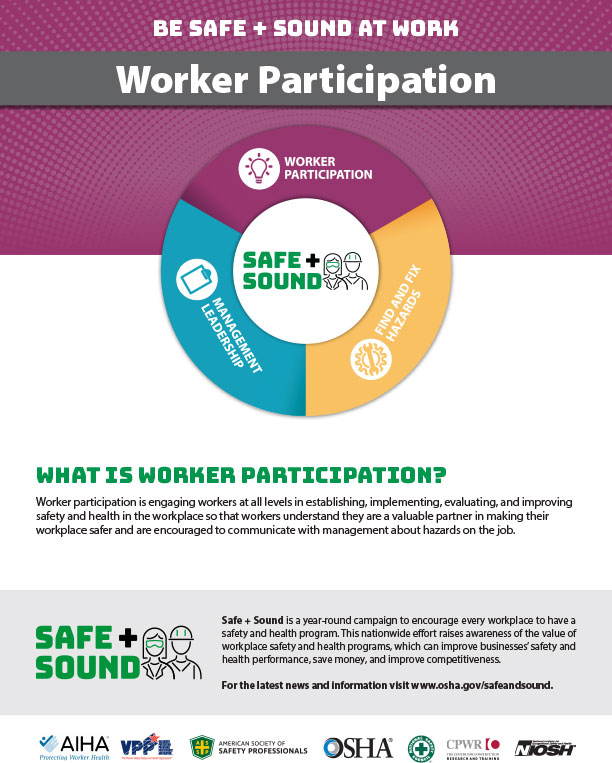
Effective safety and health programs tap into workers' collective experience, knowledge, and insight in order to find solutions to workplace safety and health challenges.
Why Is It Important?
Workers often know the most about potential hazards associated with their jobs. When they are involved in finding solutions, they feel invested in the program. To maximize participation, however, workers must feel free of any fear of retaliation or discrimination (e.g., for reporting an injury or hazardous conditions).
Workers can participate in many ways, including:
- Developing the initial program design.
- Reporting incidents (including near misses) so they can be investigated.
- Analyzing hazards associated with routine and nonroutine jobs, tasks, and processes.
- Defining and documenting safe work practices.
- Conducting site inspections and incident investigations.
- Training current coworkers and new hires.
- Evaluating program performance and identifying ways to improve it.
Resources
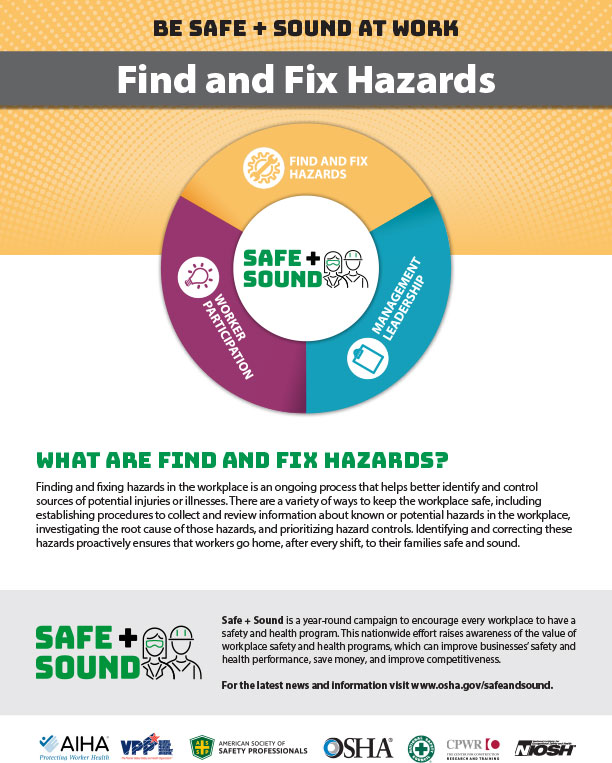
Find & Fix Hazards
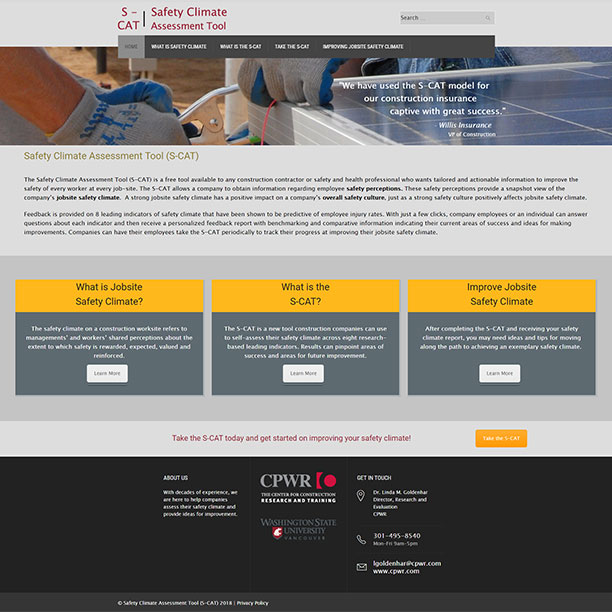
At the core of every effective safety and health program is a systematic process for identifying and controlling (i.e., finding and fixing) workplace hazards.
Why Is It Important?
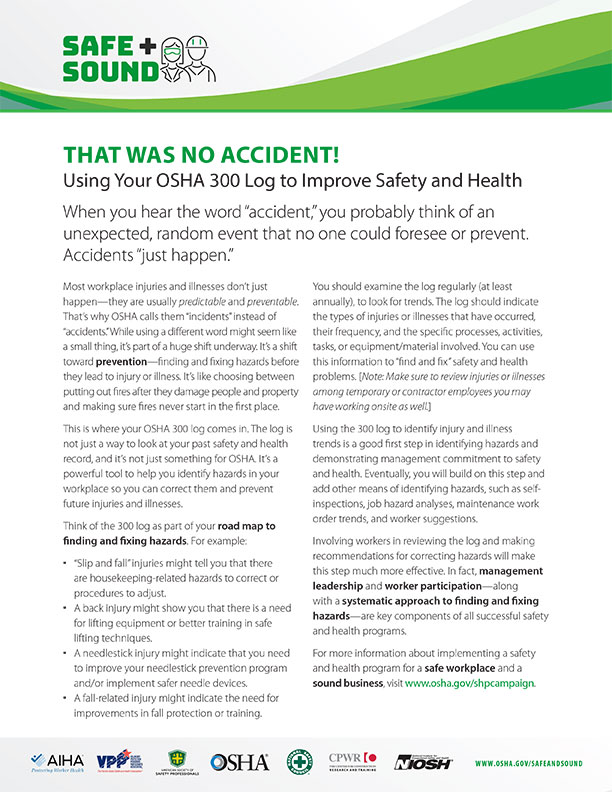
Traditional approaches to finding and fixing workplace hazards are often reactive. Actions are taken only after a worker is injured or becomes sick, a new standard or regulation is published, or an outside inspection finds a problem that must be fixed. Finding and fixing hazards using a proactive approach, before they cause injury or illness, is far more effective.
Workplaces are always evolving as new technologies, processes, materials, and workers are introduced. By adopting a systematic approach, businesses can stay on top of emerging hazards that could lead to injury or illness.
A systematic find and fix approach means:
- Involving workers, who often have the best understanding of the conditions that create hazards and insights into how they can be controlled.
- Reviewing all available information about hazards that might be present.
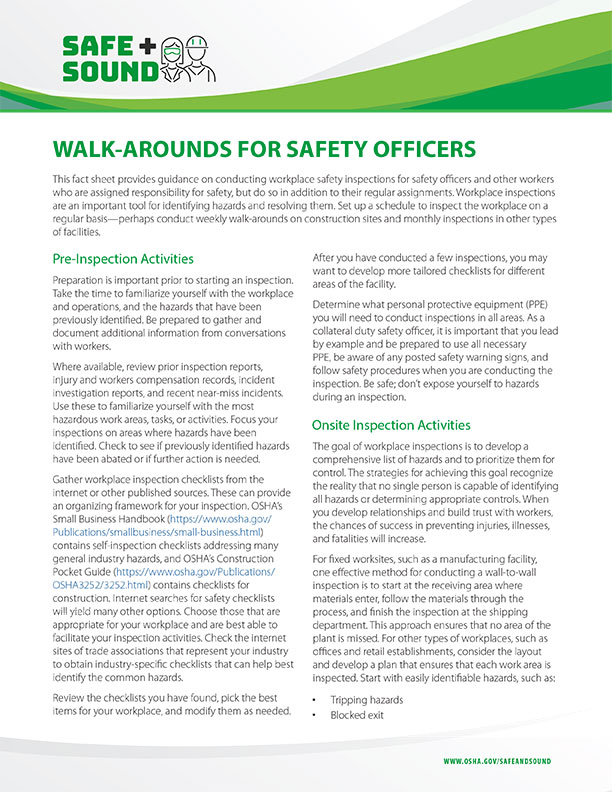
- Conducting inspections to identify new or emerging hazards.
- Investigating incidents to identify root causes and potential solutions.
- Evaluating options using the "hierarchy of controls."
- Considering how to protect workers during emergencies and nonroutine activities.
- Checking that existing controls are intact and remain effective.